

Anal cancer and anal "pre-cancer" (also known as anal intra-epithelial neoplasia or AIN) are increasingly common amongst individuals living with HIV, even when they are on effective treatment.
These cancers are mostly caused by a virus - the Human Papilloma Virus (HPV), which is more common in those living with HIV.
It is therefore recommended that you should self-check your anal area (bum hole) and rectum (bottom) at least once a year. This information will explain how you can do this.
What are the symptoms I need to be aware of?
Symptoms include bleeding, itching, lumps (warts or similar), or sores around the anus, discharge or bleeding from the back passage, pain or pressure (like the feeling that you need to poo) in the rectum.
If you notice any of these, tell your HIV doctor or your GP.
How do I examine myself?
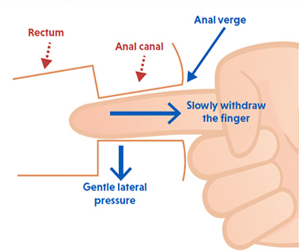
Make sure you have short fingernails before you start.
In the shower... You can feel more this way:
- While you are in the shower, gently insert your index finger inside your bottom.
- Slowly and gently rotate your finger around checking for any lumps, bumps or sores.
- Lubrication on your finger can help.
- You can use exam gloves if you prefer.
- Wash your hands after.
On the floor... You can see more this way:
- You will need a mirror and good lighting.
- Sit down with your knees up and the mirror between your thighs.
- Lay back slightly so you can see your anus (bum hole).
- Check around the outside of the anus for any lumps or sores and then with your fingers push the bum hole open to look for any bleeding or lumps.
- Wash your hands after.
Is there anything else I can do to reduce my risk of anal cancer?
- TELL YOUR DOCTOR if you're worried about any symptoms you have noticed or found. We are used to hearing about "private parts" - don't die of embarrassment.
- USE CONDOMS: Using condoms for sex will reduce the risk of acquiring HPV.
- STOP SMOKING: Smoking increases your risk of developing genital cancer. Cut down - or best of all QUIT! Speak to one of the HIV clinical team or contact www.livewelldorset.co.uk, Freephone 0800 840 1628 for support.
- GET VACCINATED: The HPV vaccine protects against infection with certain types of HPV. Talk to one of the HIV team about this.
What happens if I am found to have anything suspicious?
The HIV teams in Dorset have developed a pathway with a specialist team at the Royal Bournemouth Hospital, who have expertise in managing AIN and anal cancers.
All patients with suspected AIN or anal cancer will be referred for monitoring and treatment. In the future, if it is shown to be of benefit, screening similar to the cervical cancer screening programme may be possible.
References
European AIDS Clinical Society (EACS) guidelines 2023 p 64. Prevention and management of co-morbidities. Cancer: Screening methods https://
2008 UK National guidelines for the management of the sexual and reproductive health of people living with HIV
https://
L001\v3\Jul-25